The Kitawuluzi: A Heterotopia of Reciprocity
Curators: Zitoni Kayonga Tristan Tani and Kwasi Ohene-Ayeh
Pavilion Architect/Designer: Gerald Kikomeko Puto
Installation Artist: Wamala Kyeyune Joseph
Mediated by: Carol Kagezi
In Dialogue With: blaxxMEDIA Programming in Kumasi and Venice on the occasion of blaxTARLINES KUMASI’s participation in the 61st International Art Exhibition of La Biennale di Venezia by Koyo Kouoh
Curatorial Statement
Emerging from kąrî’kạchä seid’ou’s “silent revolution,” the blaxTARLINES approach conceives art as “a site of multiplicity” where “egalitarian conditions” enable new forms of international contemporary art practice, seeking to “transform art from the status of commodity to that of gift” through “strategies of social practice, political engagement, and participatory projects—principles that The Kitawulizi operationalizes through access for all (no tickets, no sales), community ownership (space shaped by and for Ugandan creators), participatory programming (workshops, discussions, and creation alongside viewing), and a gift economy (knowledge and experience shared freely).
Propagated by the Emancipatory Art Teaching Project, the collective’s curatorial strategies have inspired the formation of the Kitawulizi Pavilion—not as an auxiliary event, but as a parallel centre and a deliberate decentering. The pavilion asserts that the most vital conversations about art and society need not demand a pilgrimage to Venice; they can, and must, unfold within the communities that inspire the work itself.
Recognizing the importance of Venice in the global art conversation; This project acknowledges that significance while fundamentally questioning its exclusive gravity—asking why Venice should remain the sacred centre from which artistic value and discourse emanates.
Our lives are governed by hidden oppositions: centre/periphery, sacred/profane, valuable/worthless, global/local. The Kitawuluzi Pavilion is designed to collapse these binaries. Drawing on Michel Foucault’s concept of the heterotopia, we have created a space that is simultaneously real and mythic—a counter-site that mirrors, challenges, and reimagines the Venice Biennale.
While Venice presents itself as a pristine, “other space” for art, the Kitawuluzi embraces the raw, the transient, and the communal. It is a space of crisis and deviation: a forum for the crisis of exclusion and a deviation from the “Third World”as a source of raw materials( artifacts) but as a discourse space mapping coexisting heterogenous truths.( Vali Mahlouji)
Its primary archetype is the Kitawuluzi (parish court) of the Ganda people. As a space for okutawulula (to reconcile), it offers a model for our curatorial intent. The Kitawuluzi was not a place of abstract judgment, but of grounded, community-based deliberation. It was a space where: Unity and mutual respect are foundational, mediators (abatabaganya) guide discourse and Transparency and collective participation is paramount.
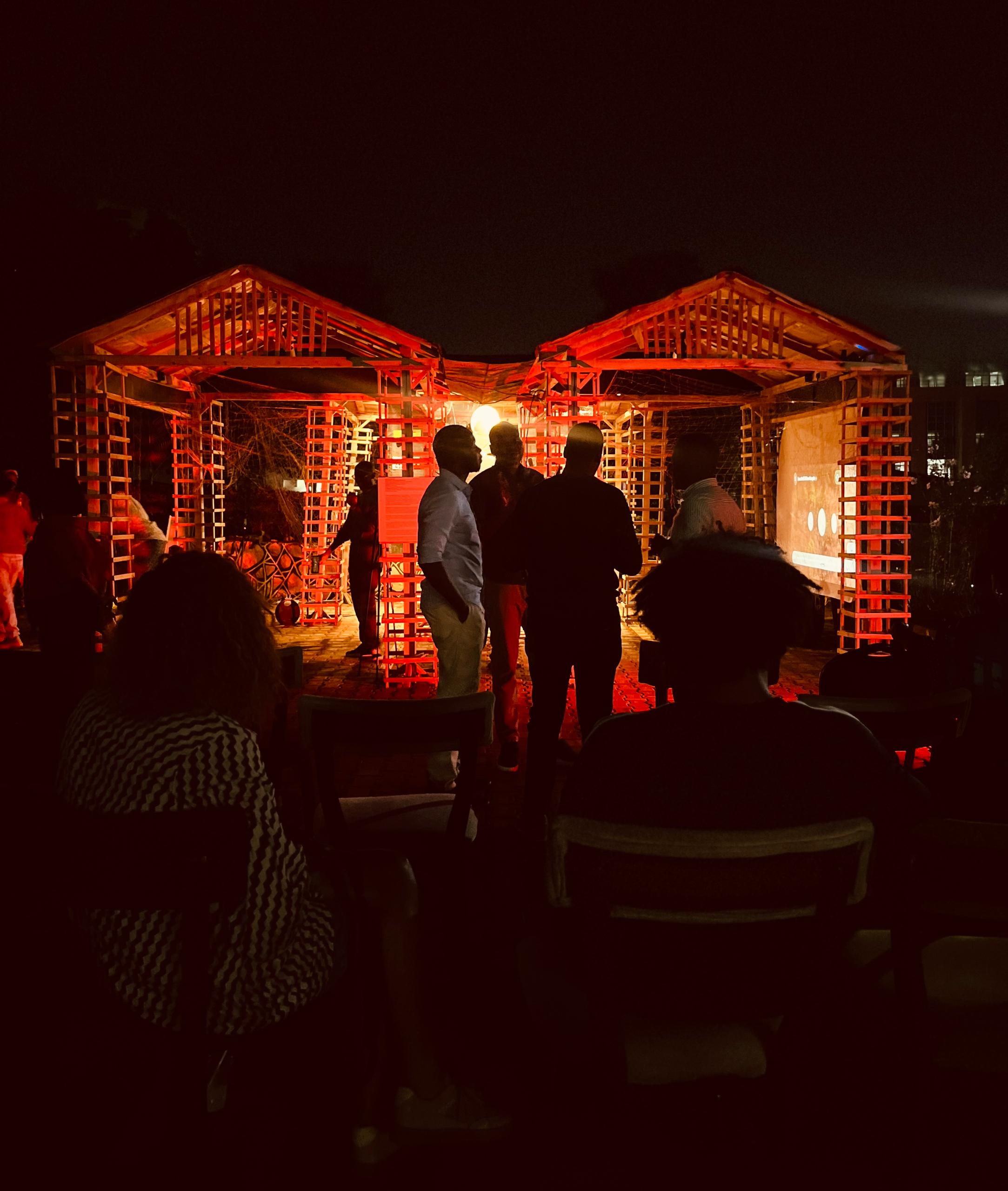
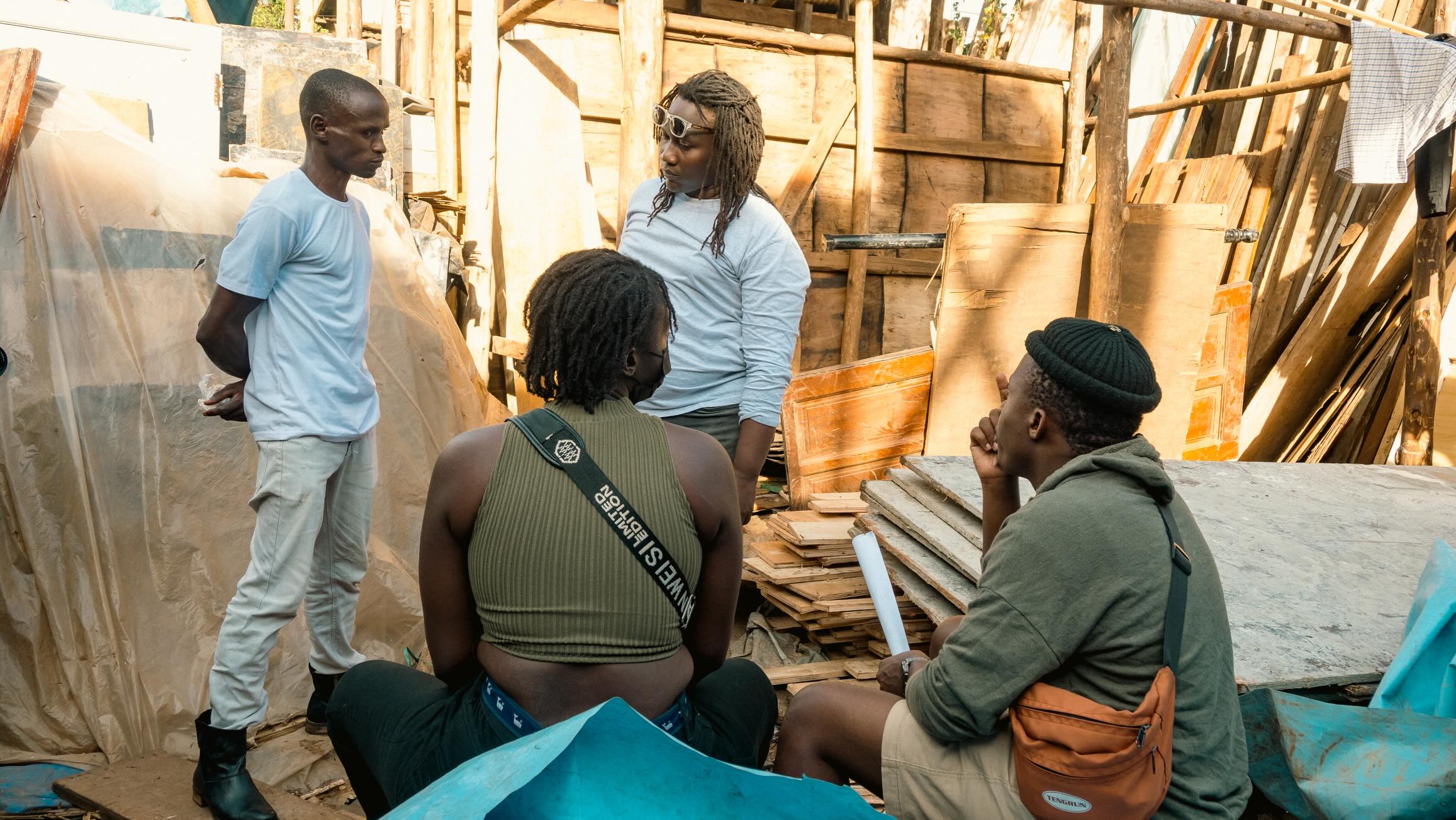
By mirroring the Kitawuluzi,the site juxtaposes several incompatible spaces into one real place: the Venice Biennale accessed via broadcast; the local parish of Kampala as a gathering ground; the sacred court as a site of deliberation; and the artisanal workshops of Kisenyi and Katwe, from which the pavilion is materially built.
The Architectonics of Translation
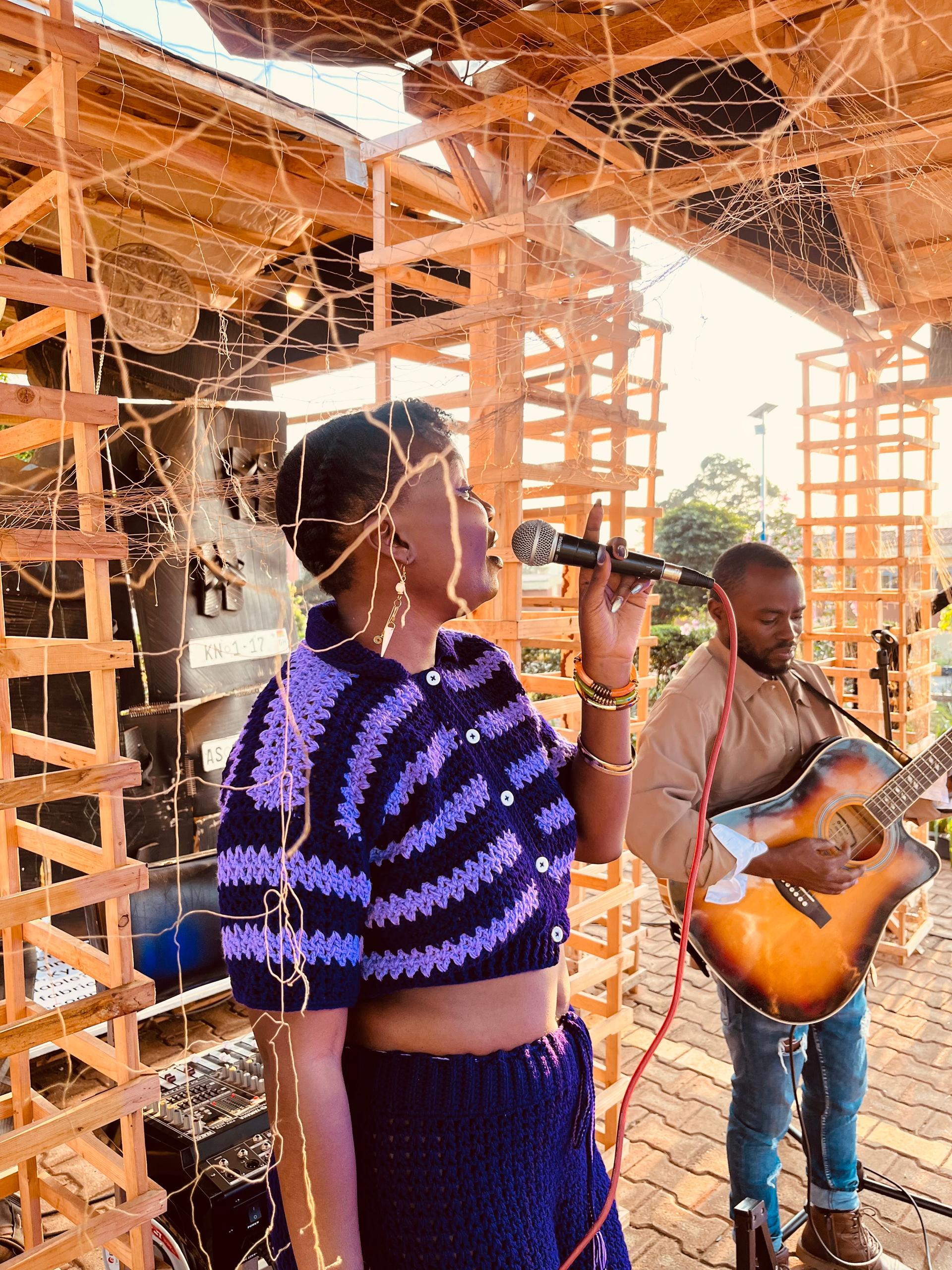
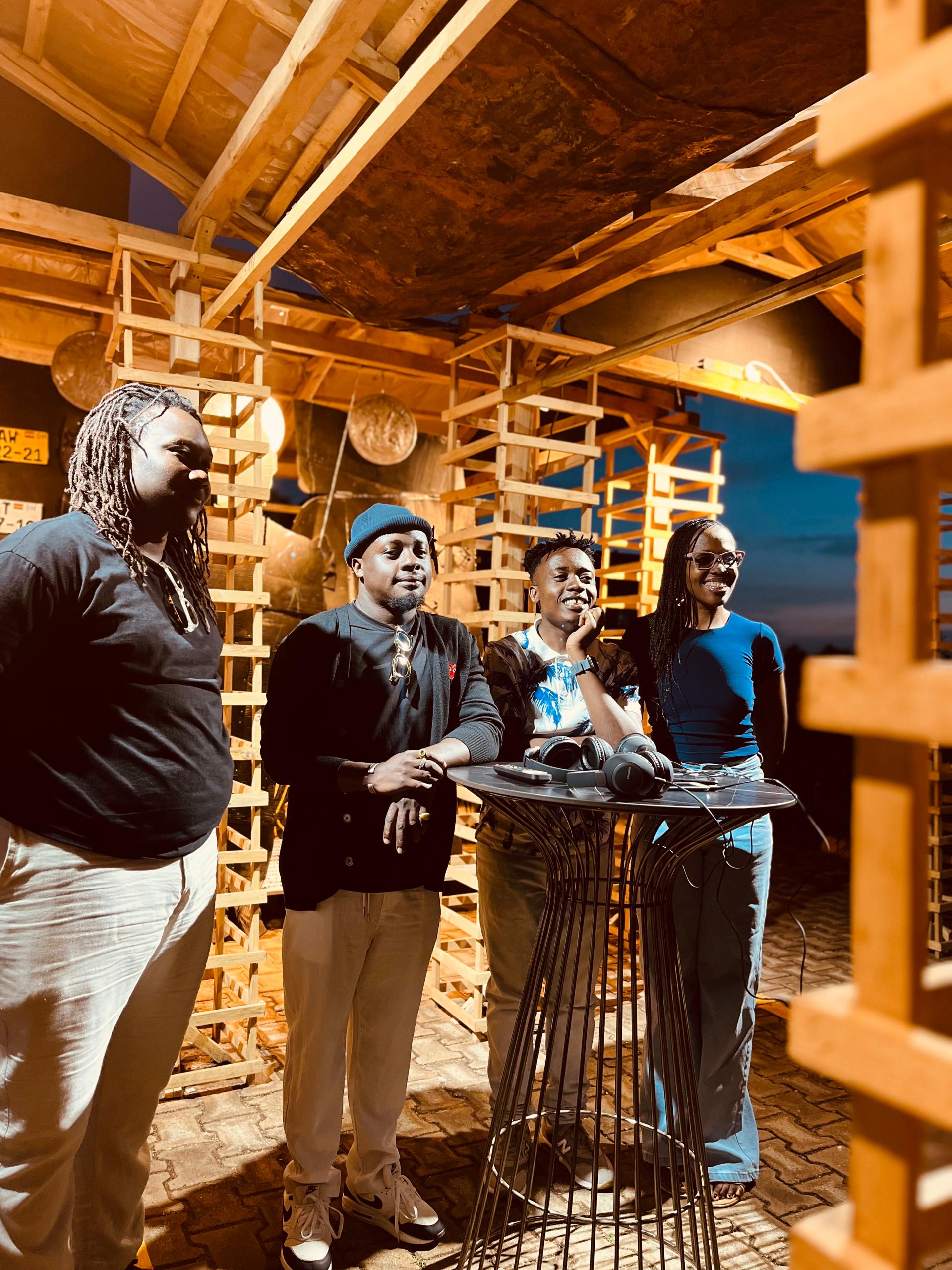
Designed by Gerald Kikomeko Puto, the pavilion is not a neutral container but the first statement of the exhibition. Its architecture is a manifesto of material translation. Built from the vernacular of Kampala’s informal economy—repurposed aluminum, casting molds, salvaged metal offcuts, and improvised construction elements—this is an architecture of exposed mechanics.
The structure reveals its own circulatory system: how materials are sourced, repurposed, and given new life. Its aesthetic of impermanence speaks to the effects of time, weathering, and adaptation. It becomes a testament to the resilience and ingenuity of local systems, where ‘VALUE’ is in a constant state of flux and translation.
Just as the Kitawuluzi was formed by the community it served, this pavilion is formed by the elements used by that community. The architecture itself mediates between the global conversation beamed in from Venice and the local reality of the ground on which we stand.
The Act of Reciprocity
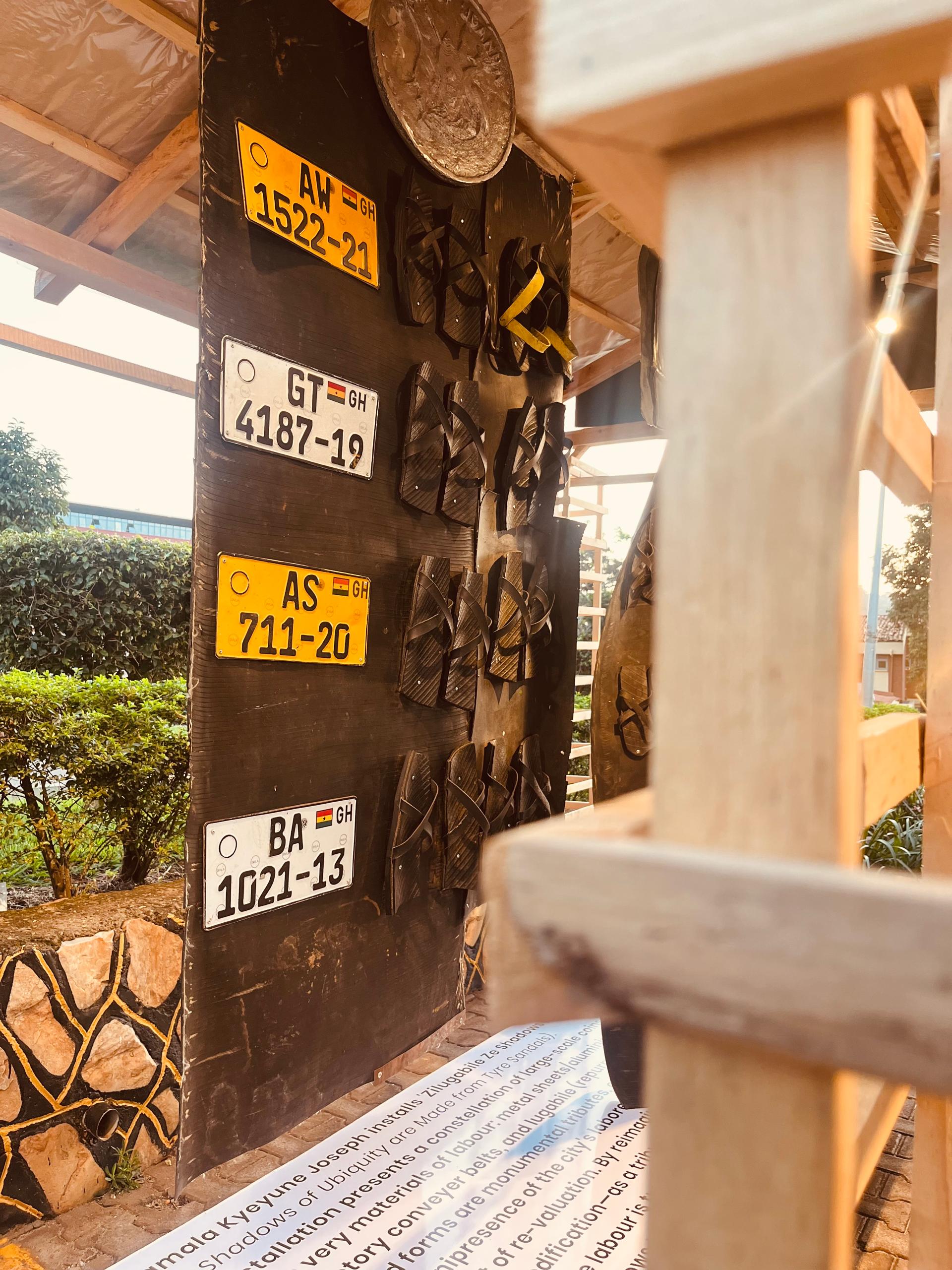
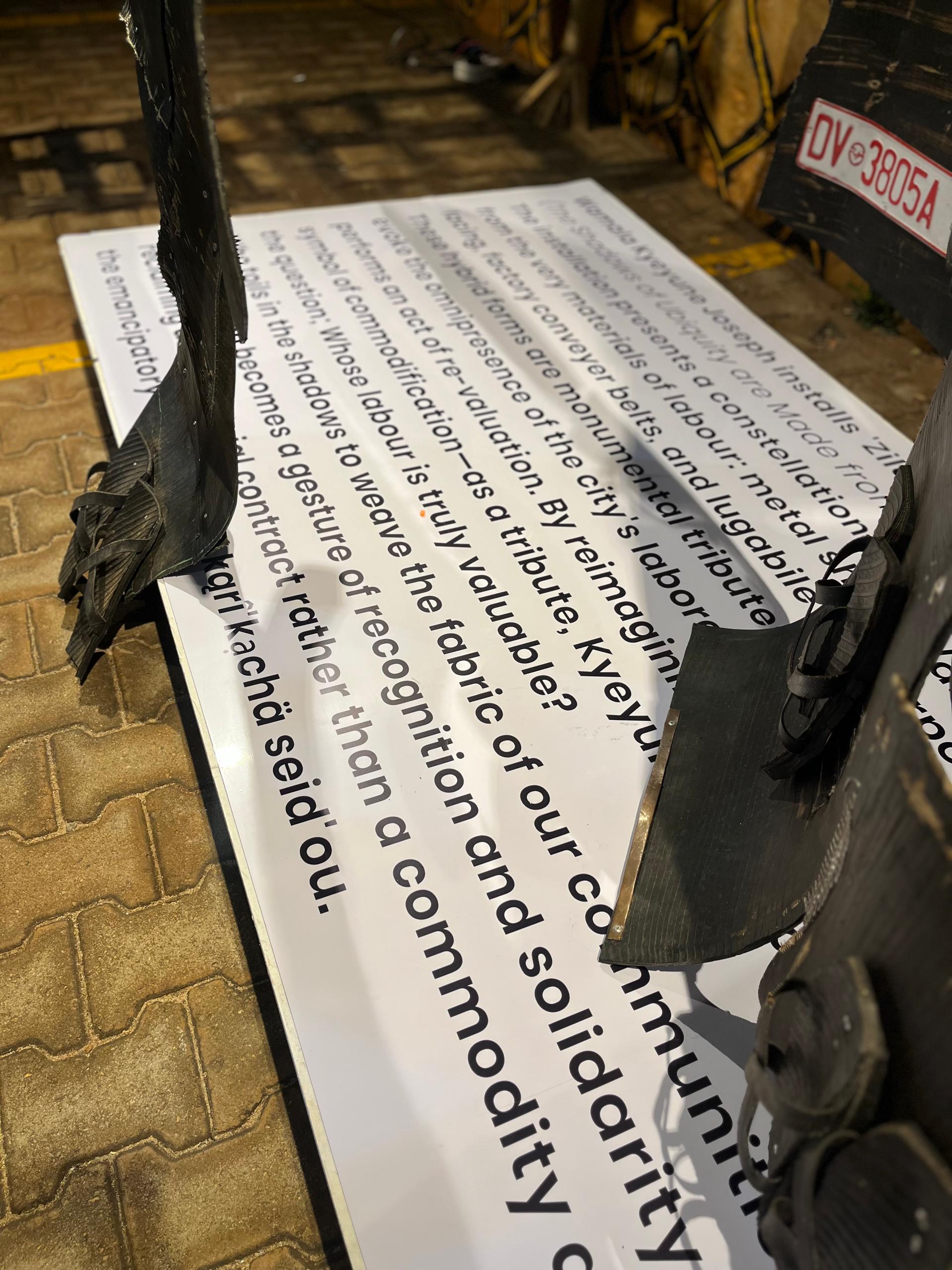
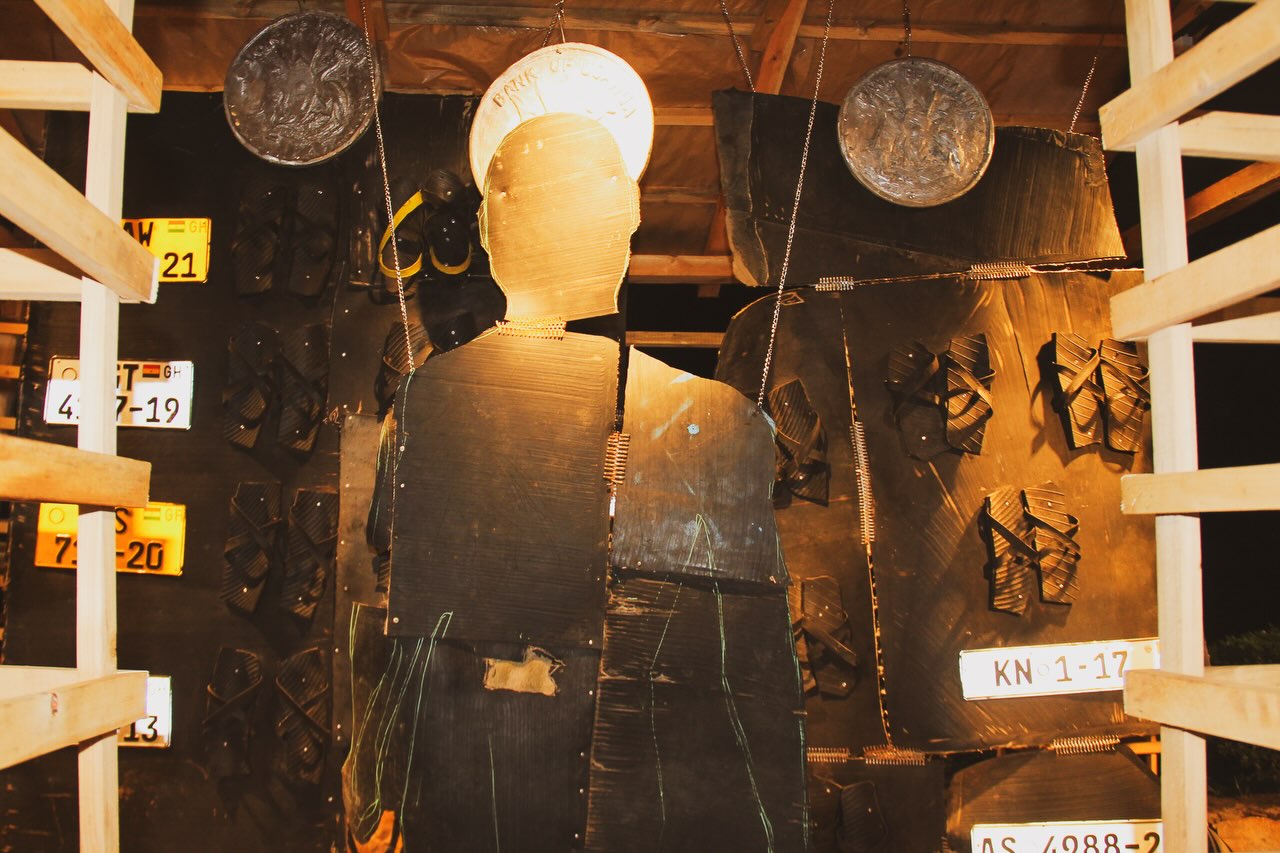
Wamala Kyeyune Joseph installs ‘Zilugabile Ze Shadows Za Ubiquity’ (The Shadows of Ubiquity are Made from Tyre Sandals).
The installation presents a constellation of large-scale coins, forged from the very materials of labour: metal sheets/aluminium, steel metal lacing, factory conveyer belts, and lugabile (repurposed tyre sandals). These hybrid forms are monumental tributes, casting long shadows that evoke the omnipresence of the city’s laborers and craftsmen. The work performs an act of re-valuation. By reimagining currency—the ultimate symbol of commodification—as a tribute, Kyeyune fundamentally poses the question; Whose labour is truly valuable? Who toils in the shadows to weave the fabric of our communities? The exhibition becomes a gesture of recognition and solidarity, reclaiming art as a social contract rather than a commodity a nod to the emancipatory teachings of kąrî’kạchä seid’ou.
Deliberation in Action
The pavilion activates the Kitawuluzi model through a dynamic public program.Broadcasts from blaxTARLINES accompanied by mediated dialogues, where abatabaganya guide conversations connecting Kampala, Kumasi and Venice. Community forums invite local artisans from Kisenyi and Katwe, alongside academics, students, and the public, to deliberate on the themes of the Biennale, the nature of artistic labour, and the politics of global art events.
A Decentralized Future
The Kitawuluzi Pavilion is a prototype for a more equitable and distributed art world. It demonstrates that a Biennale can have multiple, simultaneous centres of gravity. By creating a parallel space of inclusion, it does not simply protest the inaccessibility of Venice; it offers a tangible, functioning alternative.